Why is end-to-end integration so important for midsize CPG growth?
Midsize CPG companies are prioritizing end-to-end integration because it directly supports their main growth goals: increasing market share, attracting new customers, and expanding into new markets.
According to a 2023 Oxford Economics survey of 175 CPG executives:
- 88% have seen revenue growth over the past three years.
- They are more likely than other industries to focus on expanding into new markets (31% vs. 18% survey average).
- They also place higher priority on innovating products and business models (39% vs. 34% survey average).
To sustain this growth, they need to keep products moving efficiently and reliably. Supply chain fragility is a major concern, and 68% of CPG respondents say that supply chain and demand planning solutions are imperative to their future success.
End-to-end integration helps by:
- Connecting data across manufacturing, supply chain, logistics, sales, and channels.
- Providing real-time visibility so teams can spot issues early and respond quickly.
- Giving executives evidence-based insights to make faster, more confident decisions.
CPG leaders see that better data visibility would most improve:
- Logistics and transportation
- Channels and retailers
- Manufacturing and supply chain
In short, integration is not just a technology upgrade. It is a way to rethink how the entire business operates so that growth plans are supported by agile, data-driven processes rather than siloed systems and reactive decision-making.
How can cloud ERP and AI help CPG companies stay competitive?
Cloud ERP and AI are becoming key tools for CPG companies that want to modernize operations and stay competitive without overcomplicating their IT landscape.
On the cloud side, 73% of surveyed CPG companies have already adopted cloud technologies and are seeing tangible benefits:
- 47% report optimized processes
- 39% report improved customer experience
- 35% say cloud has encouraged innovation
Cloud ERP helps by:
- Integrating data across finance, supply chain, manufacturing, sales, and sustainability.
- Enabling end-to-end visibility so teams can work from the same real-time information.
- Providing a flexible foundation to add new capabilities, such as AI, without major disruption.
Looking ahead, CPG executives are optimistic about AI’s impact:
- 81% expect AI to have a significantly or moderately positive impact on their products and services.
- 71% expect AI to positively influence marketing and sales.
Today, only 13% have implemented AI in their operations, but 46% plan to do so within the next year. That means many are in the preparation phase—getting their data and systems ready.
With the right foundation, AI can help CPG companies:
- Automate time-consuming tasks in planning, forecasting, and reporting.
- Deliver real-time insights on key performance indicators (KPIs).
- Personalize the purchasing experience using data analytics and AI-driven recommendations.
For many midsize CPG organizations, the practical next step is to prepare IT infrastructure—often via cloud ERP—so AI capabilities can be adopted smoothly and start reshaping how decisions are made and how quickly teams can respond to market changes.
Where does sustainability fit into CPG digital and growth strategies?
Sustainability is important to CPG companies, but it is often competing with other urgent priorities like inflation, rising interest rates, and intense competition. As a result, only 11% of surveyed CPG organizations list sustainability as a top business priority for the next year, and just 14% currently have software in place to track sustainability.
However, many CPG leaders recognize that sustainability can help differentiate their brands and prepare them for tightening regulations and shifting consumer expectations. They are starting to:
- Request end-to-end visibility from their supplier networks.
- Build recycling or circular economy elements into products and services.
- Collect data for ESG reporting and to understand product carbon footprints.
- Benchmark operations to identify cost and value drivers related to sustainability.
Over half of respondents (52%) plan to adopt sustainability software within the next 12 months. This type of technology can help them:
- Comply with regulations that require full value chain transparency.
- Track and reduce corporate emissions.
- Integrate sustainability metrics into broader business and supply chain decisions.
When combined with cloud ERP and integrated data, sustainability tools allow CPG companies to reimagine how they design, produce, and deliver goods. Instead of treating sustainability as a separate initiative, they can embed it into core processes—making it easier to balance growth, compliance, and consumer expectations over the long term.



 Sign in with LinkedIn
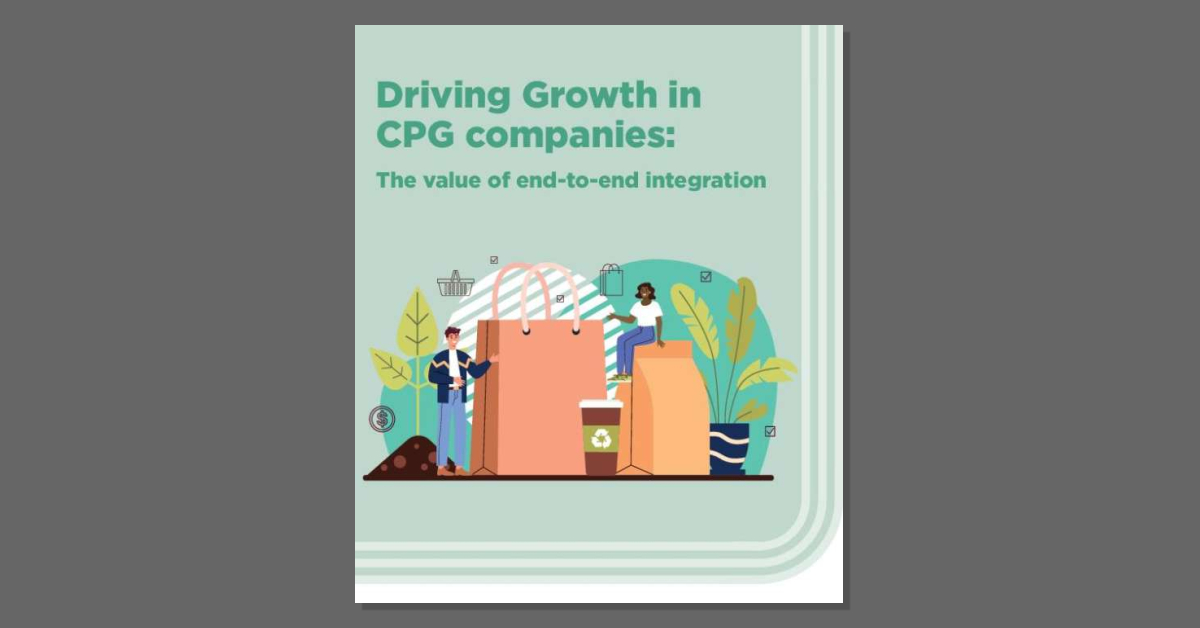 CPG companies pursuing growth need stronger visibility across operations, supply chains, and customer demand. This Oxford Economics report explores how midsize organizations use end-to-end integration, Cloud ERP, and AI to improve agility and remain competitive. Download the report to learn how these strategies help support growth while addressing supply chain and sustainability challenges.